


CAREER
Your career.
Optimized.
Join Exodraft and our shared
ambition to build the bridge to a CO₂-neutral
future with greener energy for everyone.
10 Tips for Choosing Hydraulic Cylinder Seals?
Choosing Hydraulic Cylinder Seals is a practical decision, not a simple catalog search. A cylinder working beside a steel press may face heat, pressure spikes, dust, and constant movement. Its seal must handle those conditions without causing leakage or premature wear. Small details matter.
This guide explains ten useful tips for selecting seals with greater confidence. It considers rod diameter, bore size, pressure, temperature, fluid compatibility, speed, and installation space. Measurements should come from the actual cylinder, not memory or an old drawing. Measure twice. A neat-looking seal can still be the wrong seal.
Material selection also deserves careful attention. Polyurethane may suit many demanding applications, while PTFE can perform well under specific temperature and friction conditions. Rubber compounds vary significantly, even when their names sound familiar. Always check the manufacturer’s technical data and operating limits. That assumption can be wrong. Seal performance also depends on the rod surface, groove condition, contamination control, and correct installation technique. A sharp groove edge can damage a new seal before the machine completes one cycle. Maintenance records can reveal patterns that product brochures cannot, such as leakage after cold starts or swelling after fluid changes. These ten tips connect those practical observations with dependable engineering principles. They are not a substitute for professional verification, but they can prevent rushed choices, costly downtime, and repeated repairs. Reliable selection begins with honest questions about the working environment.
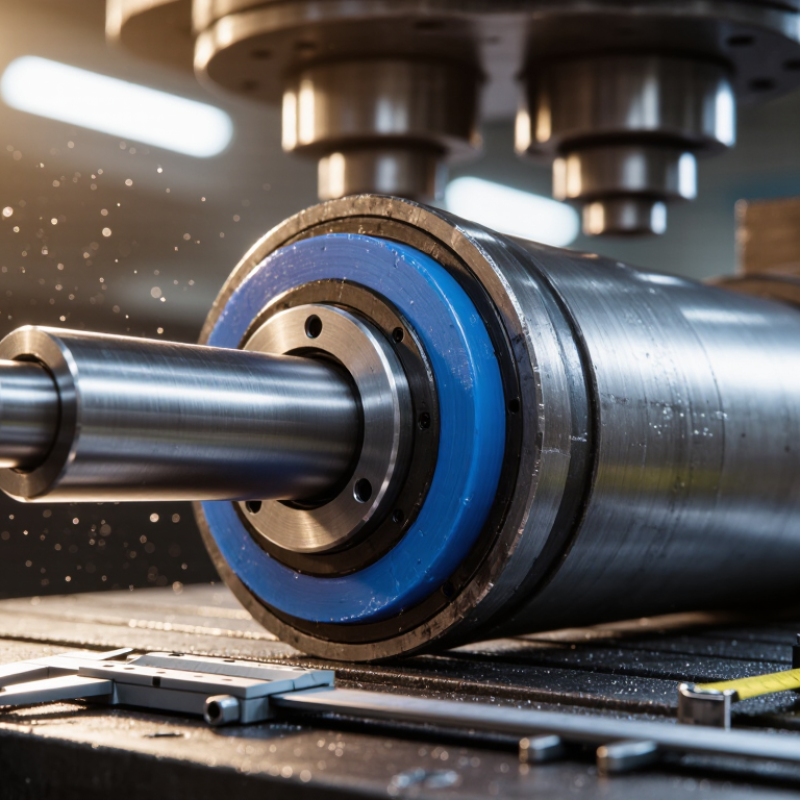
Hydraulic Cylinder Seal Functions and Operating Requirements
10 Tips for Choosing Hydraulic Cylinder Seals
Hydraulic Cylinder Seal Functions and Operating Requirements
Tip 1: Start with the seal’s job. Rod seals retain pressurized fluid, while wipers block dust, water, and metal particles. Guide rings stabilize the rod and reduce uneven loading. Tip 2: Match the seal to the fluid. Mineral oil, water-based fluids, and biodegradable fluids can affect materials differently. Tip 3: Check pressure and extrusion risk. A narrow clearance may require a stronger support ring. Small gaps can cause serious damage.
Tip 4: Record operating temperature, including short heat spikes. Tip 5: Confirm rod speed and movement frequency. High-speed cycles create heat through friction. Tip 6: Examine the rod surface closely. Scratches, corrosion, or sharp edges can cut a new seal quickly. Tip 7: Select the correct seal profile for the groove. A loose fit may leak, but excessive compression can increase drag. In field maintenance, I have seen technicians blame the seal before checking alignment. That mistake is easy to repeat.
Tip 8: Consider contamination levels around the cylinder. Tip 9: Follow clean installation practices and use suitable tools. Avoid twisting the seal during fitting. Tip 10: Review service life under real loads, not only catalog figures. Pressure surges, side loading, and poor lubrication can change performance. I would also inspect failed seals before replacing them. Sometimes the first choice was acceptable; the operating conditions were not.
Key Factors for Matching Seals to Pressure, Temperature, and Fluids
10 Tips for Choosing Hydraulic Cylinder Seals
Match the seal to the system pressure, not only the catalog rating. Tip one: check both operating and pressure-spike levels. Tip two: confirm the cylinder’s groove dimensions. A loose fit can cause extrusion. Tip three: inspect rod speed and stroke frequency. Fast cycles generate heat and friction. Tip four: consider side loading, especially on long-stroke cylinders. Misalignment can damage an otherwise suitable seal.
Temperature changes the seal’s behavior. Tip five: record the lowest starting temperature and the highest running temperature. Cold seals may harden before movement begins. Tip six: examine the fluid type and its additives. Mineral oil, water-based fluid, and biodegradable fluids need different material choices. Tip seven: verify compatibility with cleaning chemicals. A seal may survive the hydraulic fluid but swell after washing. Tip eight: account for outdoor exposure, ozone, dust, and moisture.
Tip nine: choose the right hardness for pressure and clearance. Harder materials resist extrusion, but they may increase friction. Tip ten: check installation tools and surface finish before ordering. Sharp edges, scratches, or excessive roughness can cut the sealing lip. A clean groove matters. In service work, leakage sometimes comes from poor alignment rather than seal material. This detail is easy to miss. A perfect data-sheet match can still fail in an imperfect cylinder, so inspect the actual equipment before final selection.
Material Selection for Wear Resistance and Chemical Compatibility
Choosing hydraulic cylinder seals starts with the fluid, pressure, temperature, and movement speed. Material selection is not a catalog shortcut. In field service, a seal may look suitable until oil, heat, and side loading expose its weakness. Polyurethane often handles abrasion well in mobile equipment. Nitrile can suit many petroleum-based hydraulic fluids. But neither choice is universal. Check the fluid’s additives, not only its base name. A small chemical mismatch can cause swelling, softening, or cracking.
For aggressive fluids or higher temperatures, fluorocarbon compounds may offer stronger chemical resistance. PTFE-based materials can reduce friction and tolerate demanding conditions, but they may need energizing elements or careful groove design. Wear resistance also depends on hardness, surface finish, and contamination control. A rough rod can cut a sealing lip like a blunt knife. Measure rod runout and inspect coating damage before selecting the compound. Ask for compatibility data at the actual temperature range. Room-temperature charts can mislead.
I have seen premature failures blamed on poor seals when installation tools had sharp edges. That assumption was wrong. Clean the groove, remove burrs, and lubricate the seal with a compatible fluid. Do not stretch every material the same way. A practical trial under real pressure is valuable, although one test cannot prove long service life. Record leakage, extrusion, and hardness changes after operation. Recheck the choice when the fluid, cycle rate, or temperature changes. Small details matter.
Design Checks for Seal Size, Installation, and Cylinder Geometry
10 Tips for Choosing Hydraulic Cylinder Seals
Tip 1: Confirm the seal size from the actual groove, not only the old seal. Measure bore diameter, rod diameter, groove width, and depth with clean tools. A worn groove can mislead your reading. Tip 2: Check the seal cross-section against the manufacturer’s dimensional standard. Small errors may cause leakage, extrusion, or difficult assembly. Tip 3: Match the seal material to pressure, temperature, fluid type, and sliding speed. A seal that works in mineral oil may fail in another fluid.
Tip 4: Inspect cylinder geometry before selecting the profile. Check rod concentricity, surface finish, chamfer angles, and the clearance gap. Sharp edges can cut a new seal during installation. Tip 5: Review pressure direction and movement. Some profiles seal best in one direction, while others tolerate changing pressure. Tip 6: Measure rod runout under realistic load. Static alignment can look acceptable, yet operating movement may create uneven wear. This check is often missed.
Tip 7: Protect sealing lips during installation. Use a proper sleeve over threads, ports, and keyways. Never drag an elastomer across a sharp edge. Tip 8: Lubricate compatible surfaces lightly before assembly. Too much lubricant can trap contamination or affect initial movement. Tip 9: Install the seal squarely, then verify its seating around the full circumference. I once trusted visual inspection alone; it was not enough. Tip 10: Test at low pressure before full operation. Watch for twisting, leakage, abnormal friction, and early heat. Record the measurements, because memory is a poor inspection tool.
10 Tips for Choosing Hydraulic Cylinder Seals? – Design Checks for Seal Size, Installation, and Cylinder Geometry
| No. | Design Check | Recommended Data or Dimension | Selection and Installation Guidance | Typical Risk if Ignored |
|---|---|---|---|---|
| 1 | Measure the Actual Seal Housing | Record rod diameter, bore diameter, groove diameter, groove width, groove depth, and corner radius. Use mm with a calibrated measuring tool. | Select the seal from the measured gland dimensions rather than from a nominal cylinder size. Confirm the manufacturer’s cross-section and gland tolerances before ordering. | A nominally correct seal can leak, twist, extrude, or bind when the actual groove dimensions are different. |
| 2 | Match the Pressure Rating | Compare the seal’s pressure capability with the maximum working pressure, pressure spikes, and pressure differential across the seal. | Design for the highest foreseeable pressure, not only the average operating pressure. Add an anti-extrusion backup ring where pressure, clearance, or temperature requires it. | Excessive pressure may force the seal into the extrusion gap, causing nibbling, permanent deformation, or sudden leakage. |
| 3 | Check Seal Cross-Section | Verify the radial cross-section against the gland depth and the required squeeze. A common static elastomer seal design uses approximately 10–30% radial squeeze, subject to the seal profile and application. | Use the seal profile supplier’s gland specification for the final value. Do not increase squeeze simply to compensate for an incorrectly sized groove. | Too little squeeze can cause leakage; too much squeeze increases friction, heat, wear, and assembly damage. |
| 4 | Evaluate Dynamic Clearance | Calculate the maximum extrusion gap from bore, rod, guide, piston, and pressure-part tolerances. Consider material hardness and peak pressure when setting the allowable gap. | Minimize clearance while preserving the required running fit and thermal allowance. Use a backup ring or a harder seal compound when the calculated gap is too large. | Excessive clearance can produce extrusion, rapid edge wear, seal failure, and contamination of the hydraulic fluid. |
| 5 | Confirm Rod and Bore Surface Finish | For many hydraulic dynamic sealing applications, a smooth, controlled surface is required. Typical rod sealing surfaces are often specified around Ra 0.1–0.3 µm, while cylinder bores may commonly be around Ra 0.2–0.4 µm; use the seal profile specification for the final limits. | Check roughness, lay direction, waviness, roundness, and burrs. Honing marks should support lubrication without creating a leakage path. | A surface that is too rough cuts or abrades the seal; a surface that is too smooth may retain insufficient lubricant. |
| 6 | Account for Temperature and Fluid Compatibility | Check the complete temperature range, fluid type, additives, water content, and exposure duration. Common hydraulic fluids include mineral-oil-based fluids, water-glycol fluids, and biodegradable fluids, each requiring compatibility verification. | Select the elastomer and seal material from verified compatibility data. Consider both continuous temperature and short-duration temperature peaks. | Chemical attack, swelling, shrinkage, hardening, softening, or loss of elasticity can occur even when pressure and dimensions are correct. |
| 7 | Inspect Cylinder Geometry and Alignment | Review rod-to-bore alignment, piston squareness, guide length, rod deflection, mounting loads, and side-load magnitude. Seals should not be used as primary guides. | Use adequate bearing or guide length and correct misalignment at the cylinder, clevis, mounting, or machine structure. Design the guide system to carry side loads. | Side loading can create uneven seal wear, localized extrusion, rod scoring, friction increase, and premature leakage. |
| 8 | Design Safe Installation Features | Provide lead-in chamfers, rounded entry edges, clean grooves, and adequate assembly clearance. A common installation lead-in chamfer is approximately 15–20°, with the exact length based on seal size and profile. | Remove burrs and sharp edges, cover threads and ports, lubricate with a compatible fluid, and use non-sharp installation tools. Avoid stretching seals beyond the profile limit. | Cuts, twisting, rolled lips, pinched sections, and hidden installation damage may cause leakage during initial operation. |
| 9 | Allow for Thermal Expansion | Check dimensional changes in the seal, gland, rod, piston, and cylinder caused by the full operating temperature range. Account for differences in thermal expansion between steel and polymer materials. | Verify that the seal will retain sufficient squeeze at low temperature without excessive compression at high temperature. Include temperature effects in clearance and extrusion calculations. | Cold contraction can cause leakage and loss of flexibility; heat-related expansion can increase friction, pressure, and seal wear. |
| 10 | Plan Lubrication, Contamination Control, and Testing | Define cleanliness requirements, filtration level, initial lubrication, break-in procedure, leakage acceptance, cycle count, speed, pressure, and temperature for validation testing. | Flush the system, prevent dirt ingress, protect exposed rods with suitable wipers, and test the complete cylinder under representative load and duty-cycle conditions. | Dirt, moisture, inadequate lubrication, or unrepresentative testing can shorten seal life and conceal design problems. |
Maintenance Practices for Reliable Seal Performance and Service Life
10 Tips for Choosing Hydraulic Cylinder Seals
Reliable seal life begins with maintenance, not the catalog number. Check rod surfaces during every planned inspection, especially near wipers and gland areas. A visible oil film may be normal; a growing drip is not. Record pressure, temperature, stroke speed, and fluid type before selecting replacement seals. ISO 4413:2010 stresses contamination control and safe maintenance practices for hydraulic systems. ISO 4406 also classifies fluid cleanliness by three particle sizes. Small particles matter.
Keep spare seals sealed, cool, and away from sunlight. Clean the groove with a lint-free cloth, not a sharp metal tool. Confirm the seal direction before installation. Lubricate compatible surfaces lightly, then avoid stretching elastomeric seals over threads or keyways. Replace damaged backup rings, guide rings, and wipers at the same time. A new seal cannot correct a scored rod or excessive side loading. The U.S. Department of Energy’s Industrial Assessment data links preventive maintenance with measurable energy and production savings, although results vary by site. That caveat matters.
Use filtration suited to the valve and actuator manufacturer’s cleanliness target. Inspect filters for pressure drop, not just appearance. During commissioning, run several slow strokes and check for twisting, heat, and abnormal noise. Log leakage after one hour, one shift, and one week. I still see teams tighten fittings to hide seal failure. It usually worsens the problem. Review the first replacement carefully; an uneven wear pattern can reveal misalignment, pressure spikes, or an incorrect compound. Repair records should include the failed seal’s location, hardness, dimensions, and operating conditions.